A full case study of a completed conversion: a period Georgian townhouse in Mount Pleasant, Swansea acquired in March 2023 for £411,000, converted into a 14-bedroom HMO at a build cost of £300,000, refinanced onto a Shawbrook buy-to-let facility against a valuation of £1,225,000, and now operating as a rental asset producing approximately £110,000 of gross annual rent.
The project encountered a three-month planning delay during its lifecycle. The investor — Raf, on a fixed-return loan structure — received pro-rata extended interest at his agreed rate to cover the overrun period.
This article walks through the project from acquisition to operational rental asset, the structural features that allowed it to refinance at 75% LTV with every penny of project cost covered, and what the project illustrates about how we deliver no-money-left-in unicorn outcomes at scale.
The site at acquisition

12 Gore Terrace sits in Mount Pleasant, an established residential area of Swansea immediately adjacent to the city centre. The area is dominated by period Georgian and Victorian townhouses — three- and four-storey properties built originally as family residences in the 19th century, many of which have been adapted over time into flats, HMOs, or small commercial uses.
The property at 12 Gore Terrace, when we acquired it in March 2023, was a tired period townhouse with the bones of a high-quality conversion but none of the work to make it one. Significant floor area across multiple storeys. Established residential planning position. Strong rental demand pull from the wider Swansea professional and postgraduate market. The kind of building that — to most generalist buyers — looked like an awkward, hard-to-finance, hard-to-renovate period property. To an operator with conversion capability, the same building looked completely different.
This is the structural pattern that runs through our strongest acquisitions — the same pattern we covered in detail in our forced appreciation article. A property’s value as-is reflects what generalist buyers see. The same property’s value with planning consent, capable execution, and specification appropriate to the local market reflects what’s actually possible.
The deal
On 8 March 2023, we acquired 12 Gore Terrace through the SPV established for the project — 12 Gore Terrace Ltd — for £411,000.
The acquisition price reflected the property’s commercial market position as a period townhouse requiring substantial work. The Mount Pleasant location is strong, but the practical reality of converting a Victorian/Georgian period building into a current-specification HMO involves operational complexity that filters out most buyers.
The deal was acquired with the conversion business case modelled in detail before commitment. The forced appreciation thesis was clear: a 14-bedroom en-suite HMO in this part of Swansea, finished to current specification, would support a substantially higher valuation than the acquisition price. The question wasn’t whether the value could be created. The question was whether our operational discipline could deliver the conversion on budget and on timeline.
The planning route
Mount Pleasant sits within an area of Swansea where HMO conversions have been a focus of local planning policy. The route to consent for a 14-bedroom HMO required full planning application — not the streamlined Permitted Development route available in some UK locations.
The application was submitted, supported by appropriate design and policy argument. Consent was granted — but with a planning delay of approximately three months past the original modelled timeline.
The cause of the delay was within the standard category of UK planning friction. Local authorities are under-resourced. Planning decisions take longer than the optimistic base case assumes. Conditions take longer to discharge than budgeted. Three months of planning delay is unremarkable in current UK conversion development — the kind of friction every well-structured project should be prepared to absorb without it destroying investor outcomes.
The structural feature that allowed Gore Terrace to absorb the delay cleanly was the conservative project structure underlying the deal. We covered the framework in detail in our project overruns article — strong margin against final value, conservative leverage, explicit contingency budgeting, realistic timeline assumptions, and a clear evidenced exit strategy.
Gore Terrace had all five.
The build
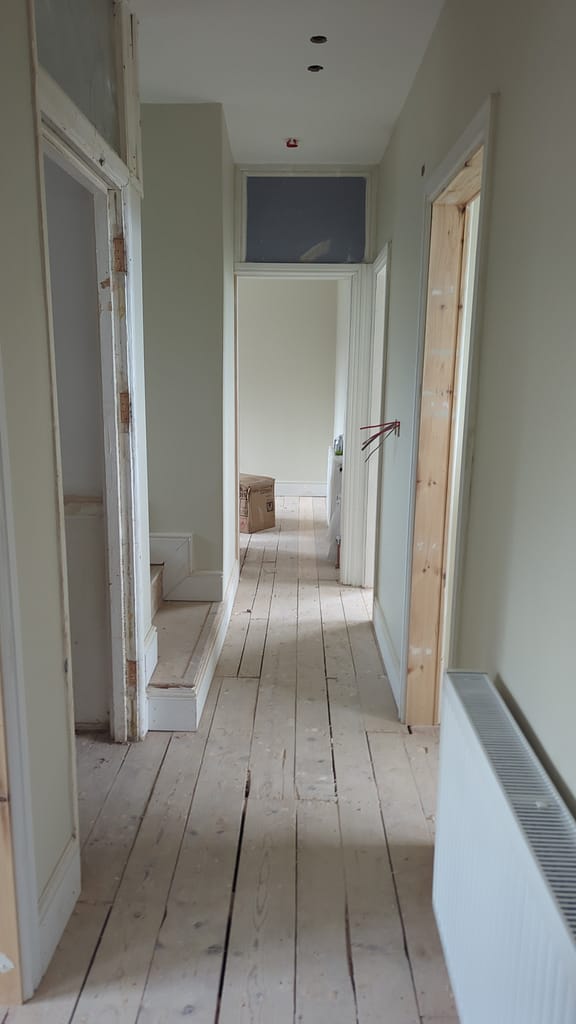
The conversion work transformed the period building into a 14-bedroom en-suite HMO finished to a specification appropriate for the upper end of the Swansea HMO rental market.
Build cost modelled at acquisition: £250,000. Build cost at completion: £300,000.
The £50,000 overrun on build cost represented approximately 20% above the original modelled budget. This is a typical conversion friction pattern — period buildings reveal conditions during the build that weren’t visible during pre-acquisition surveys. Structural issues. Service routing complications. Compliance gaps with current building regulations. In older properties specifically, the “unforeseen conditions” risk is the largest single source of build programme overrun.
The £50,000 of additional cost was absorbed through the project’s contingency budget and the structural margin between final value and total project cost. The key point: even with the build overrun, the project economics still produced a no-money-left-in outcome at refinance. That’s the test of project structure — whether friction within typical ranges destroys the deal or whether the structure absorbs it without compromising investor outcomes.
The build was funded through a SJL Capital development finance facility, drawn in stages against construction progress.
The structural numbers

The full project picture at completion:
| Element | £ |
|---|---|
| Purchase price | £411,000 |
| Build cost (final, including overrun) | £300,000 |
| Other project costs (finance, fees, contingency) | ~£210,538 |
| Total project cost | £921,538 |
| Final valuation (refinance) | £1,225,000 |
| Forced appreciation created | £814,000 (~198% on acquisition price) |
The project converted a £411,000 acquisition into a £1.225m completed asset. The total value created — net of the conversion cost — is what makes the refinance structure work.
The refinance and the unicorn outcome
This is the structural feature that makes Gore Terrace genuinely remarkable in the UK property investment universe.
The completed HMO was valued at £1,225,000 and refinanced onto a Shawbrook buy-to-let mortgage facility at 75.23% LTV — a senior loan of £921,538.
That senior loan of £921,538 covered the entire total project cost of £921,538.
Every penny of the original acquisition, every penny of the build cost (including the £50,000 overrun), every penny of finance and fees — covered by the 75% LTV refinance onto the long-term mortgage. All investor capital, all developer equity, recovered in full at the refinance event.
This is what insiders call a unicorn deal — a no-money-left-in outcome at the BRR scale. We covered the structural rarity of unicorn deals in detail in our article on no-money-left-in property investing. Most BRR deals don’t produce unicorn outcomes. Most leave £15,000-£30,000 of capital stuck in the property. Gore Terrace produced a clean unicorn — every penny of project cost recovered through the refinance.
The five conditions for a unicorn deal — below-market acquisition, on-budget refurbishment, supportive refinance valuation, rental coverage for the mortgage’s affordability test, and timing discipline — were achieved on this project even after a 20% build cost overrun and a three-month planning delay. That’s not coincidence. That’s structural discipline applied to a project with enough margin headroom to absorb friction and still produce the unicorn outcome.
Raf’s position as the investor
Raf participated in Gore Terrace as a capital partner under a fixed-return loan structure, at his agreed rate in the 15-20% per annum range.
He was the only private investor on the project. His capital position was secured by a second legal charge against the property at HM Land Registry — registered, solicitor-handled, independently verifiable. We covered the specifics of how we structure investor security in our investor security article.
When the three-month planning delay extended the project timeline, Raf’s loan term extended pro-rata, and his fixed return continued to accrue at his agreed rate for the extension period. He received additional interest at his agreed rate for the three months his capital was deployed beyond the original modelled term.
At the refinance event, Raf’s capital was fully returned, along with the full extended interest. His total return on the Gore Terrace deployment was higher than the original modelled return — because the project ran longer, and the fixed-return structure scaled with the time his capital was deployed.
Throughout the project lifecycle — including the planning delay and the build overrun — Raf was kept fully informed. The communication pattern we apply during friction is the same one we described in detail in the overrun article. more frequent updates during difficulties, specific information rather than reassurance, a structured path forward agreed in advance rather than uncertainty.
The post-completion position
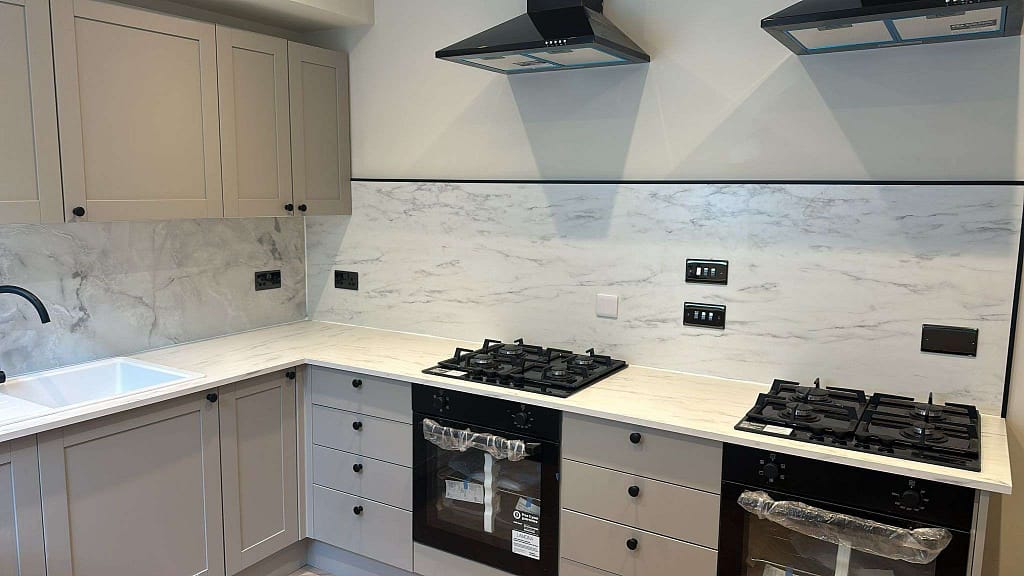
The Gore Terrace project is now operating as a 14-bedroom HMO rental asset, generating gross monthly rental income of approximately £9,166.67 — or roughly £110,000 per annum.
The Shawbrook senior mortgage facility runs until October 2029 with monthly interest cost of £4,868.79 — approximately 6.4% annualised on the £921,538 balance.
The asset is held within 12 Gore Terrace Ltd and continues to produce rental income for the SPV. The forced appreciation that created the £1.225m valuation hasn’t gone anywhere — it remains embedded in the asset.
From an investor perspective, Raf’s capital was returned in full at the refinance event with extended interest. From an operating perspective, we now hold a £1.225m rental asset, generating £110,000 of annual gross rent, with the entire project cost covered by the senior mortgage — and the original capital available to be redeployed into the next acquisition.
This is what unicorn deals look like at the operator’s pipeline level. The capital recycles. The same equity that funded Gore Terrace becomes the equity that funds the next project. And the next. Compounding pipeline activity emerges from a series of unicorn outcomes delivered consistently rather than occasionally.
What Gore Terrace illustrates about our operating discipline
Five structural features made the unicorn outcome possible on Gore Terrace. Each is a discipline we apply across the pipeline, not a one-off feature of this specific deal.
1. Acquisition pricing that left structural room
The £411,000 acquisition was priced with the conversion business case modelled in detail. We walked into the deal knowing what the forced appreciation potential was and what the conversion cost would be. Acquisitions that don’t show this room at the front end aren’t pursued, regardless of how interesting they look. We covered this discipline in detail in our forced appreciation article.
2. Conversion specification targeted at the right market segment
The 14-bedroom HMO was finished to a specification appropriate for the upper end of the Swansea HMO rental market. Not over-specified (which would have eroded margin) and not under-specified (which would have produced a lower valuation at refinance). The specification choice directly affects the valuation outcome — and the valuation outcome is what determines whether the refinance covers the project cost or leaves capital stuck in the deal.
3. Conservative project structure with built-in friction absorption
The project was structured with enough margin between final value and total project cost to absorb the 20% build overrun and the three-month planning delay without compromising the unicorn outcome. This isn’t accidental — it’s the operating discipline we described in the overrun article in detail.
4. Established contractor relationships managing the build
The build was delivered by contractors we work with on multiple projects across the regional pipeline. Repeat relationships produce realistic upfront pricing and consistent delivery in ways one-off contractor engagements cannot. Even when this project ran £50,000 over the original budget — within typical variance for period building conversions — the relationship structure absorbed it cleanly.
5. Refinance preparation that supported the valuation
The Shawbrook valuation at £1.225m wasn’t the result of luck. It reflected the property and the comparable evidence supporting the valuer’s professional opinion. The specification choices, the design decisions, the comparable transactions researched and presented — all aimed at producing a valuation that would support the refinance the project economics required.
This is the through-line that explains why we deliver unicorn deals at a rate most operators can’t match. Five structural disciplines applied consistently. Failure on any one of them turns a unicorn into an ordinary BRR that leaves capital stuck in the deal. Success across all five produces the no-money-left-in outcome.
What this project illustrates more broadly
Three things worth taking from Gore Terrace as a case study:
1. The structural disciplines we’ve described across our content body produce the outcomes we describe. This isn’t theoretical. £411,000 acquisition, £921,538 total project cost, £1,225,000 refinance valuation, 75.23% LTV refinance covering 100% of project cost. The numbers are documented; the structural framework that produced them is the same framework we’ve described in every Cluster 4 article.
2. Friction within typical ranges doesn’t destroy well-structured projects. Gore Terrace ran £50,000 over build budget (20% overrun) and three months past the original planning timeline. Most BRR projects encountering this much friction lose their unicorn outcome — and many become losing positions for investors. Well-structured projects absorb the friction without breaking the structure. The difference is structural choices made before the project starts, not heroics performed once problems emerge.
3. Investor outcomes scale with the operator’s pipeline discipline, not with individual deal luck. Raf is now part of multiple projects across years — Gore Terrace was one, with later deployments into other pipeline projects. The repeated relationship across multiple unicorn-grade outcomes is what builds the kind of capital partnership that compounds. Single positive outcomes are coincidence. Repeated positive outcomes are operating quality.
The bigger picture for capital partners
Gore Terrace is one project. Our broader portfolio includes Mozarts (currently in build), Windsor Lodge (Grade II listed conversion, completed under operational difficulty), Trowbridge, Gorseinon, Ilfracombe, and others. The pattern across the portfolio is consistent — acquisition with structural margin, forced appreciation through planning and conversion, conservative gearing, refinance or sale to recover project cost and produce capital return to investors.
For capital partners specifically, the implication is that participating in our projects is participation in this operating discipline. The structural protections we’ve described in our investor security article and overrun article sit on top of a project pipeline that produces unicorn-grade outcomes more often than the wider UK property development industry achieves.
This is what the operator vetting framework we described in our vetting article is designed to surface. Operators capable of delivering Gore Terrace-type outcomes consistently are categorically different from operators who claim the same thing without the structural discipline behind it. The difference shows up across multiple completed projects, with real numbers, across investors who’ve been through full cycles and chosen to deploy capital again.
For Raf specifically, Gore Terrace was an early project that produced the unicorn outcome the conversion thesis predicted. His continued participation in subsequent projects is the truest signal of how the relationship developed from that experience.
In summary
12 Gore Terrace in Mount Pleasant, Swansea was acquired by us in March 2023 for £411,000. It was converted into a 14-bedroom en-suite HMO with a build cost of £300,000 (£50,000 over the original £250,000 budget). The project encountered a three-month planning delay during its lifecycle. The completed asset was valued at £1,225,000 and refinanced onto a Shawbrook buy-to-let facility at 75.23% LTV — a £921,538 loan that covered the entire £921,538 total project cost.
This is a no-money-left-in unicorn outcome — every penny of project cost recovered through the refinance, with the £1.225m rental asset retained as an income-producing property generating approximately £110,000 of annual gross rent.
Raf participated as the single capital partner on the project under a fixed-return loan structure in the 15-20% per annum range, secured by second legal charge at HM Land Registry. The three-month planning delay extended his loan term pro-rata; he received additional interest at his agreed rate for the extension period. Capital and full extended interest returned at the refinance event.
Five structural disciplines made the unicorn outcome possible despite typical-range friction: acquisition pricing with structural room, conversion specification targeted at the right market segment, conservative project structure with built-in friction absorption, established contractor relationships, and refinance preparation supporting the valuation.
The project illustrates the operating discipline that we apply across our broader pipeline — and the structural feature that allows capital partners to participate in unicorn-grade outcomes through a fixed-return loan position with second-charge protection.
If you want to participate as a capital partner in future projects structured around the same disciplines that produced the Gore Terrace outcome — you can join the Prop Invest UK investor list. We share specific opportunities with capital partners and welcome the due diligence approach described across our content.
This article is general information only and is not financial advice. Returns referenced are historical outcomes on this specific completed project and are not indicative of future performance. UK property development carries risk; capital is at risk. Outcomes on individual projects depend on planning, construction, market conditions, valuation, refinance availability, and execution factors that vary by deal.