
Most landlords do not stall because they lack ambition. They stall because the second or third purchase exposes every weakness in the model – poor finance, thin cash reserves, weak deal selection, and too much reliance on personal time. If you want to understand how to grow buy to let portfolio holdings properly, you need to think less like a collector of properties and more like an operator building a durable asset base.
That shift matters. One rental can be managed with effort and optimism. A portfolio needs structure, discipline and a clear reason for every acquisition. More units do not automatically mean more freedom. In many cases, they simply magnify bad decisions.
How to grow buy to let portfolio without losing control
The first mistake investors make is chasing volume. They assume growth is about adding doors as quickly as possible. It is not. Sensible portfolio growth is about increasing income quality, strengthening equity positions, improving finance terms where possible, and reducing operational friction as the portfolio expands.
In practical terms, that means every purchase should do one of three jobs. It should improve cash flow resilience, strengthen the balance sheet, or create strategic access to the next level of growth. If a deal does none of those things, it is probably a distraction.
There is a commercial difference between owning several rentals and building a portfolio that can hold its value through changing rates, regulation and tenant demand. Serious investors know that growth without control is not growth. It is exposure.
Start with the portfolio you actually want
Before buying anything else, define the end position. Not the dream version, the operating version. Are you building for long-term income, future refinancing strength, family wealth planning, or a combination of all three? Your answer affects location, property type, finance structure and management model.
An investor building towards a hands-off portfolio will make different decisions from one prepared to be heavily involved in refurbishments, tenant management and compliance. There is no universal blueprint. A portfolio of high-maintenance stock in scattered locations may look impressive on paper, but it often becomes inefficient very quickly.
Clarity at this stage prevents expensive drift. A portfolio should feel coherent. Similar tenant demand, sensible geography, and assets that support each other are usually better than a random collection of opportunities bought because they were available at the time.
Focus beats variety early on
There is a temptation to diversify too early across flats, HMOs, mixed-use stock and short-term lets. For most investors, that creates complexity before competence. Early-stage growth is usually stronger when the model is tighter – one or two locations, one core tenant profile, one repeatable acquisition criteria.
That is not about thinking small. It is about building something scalable.
Buy better, not just more
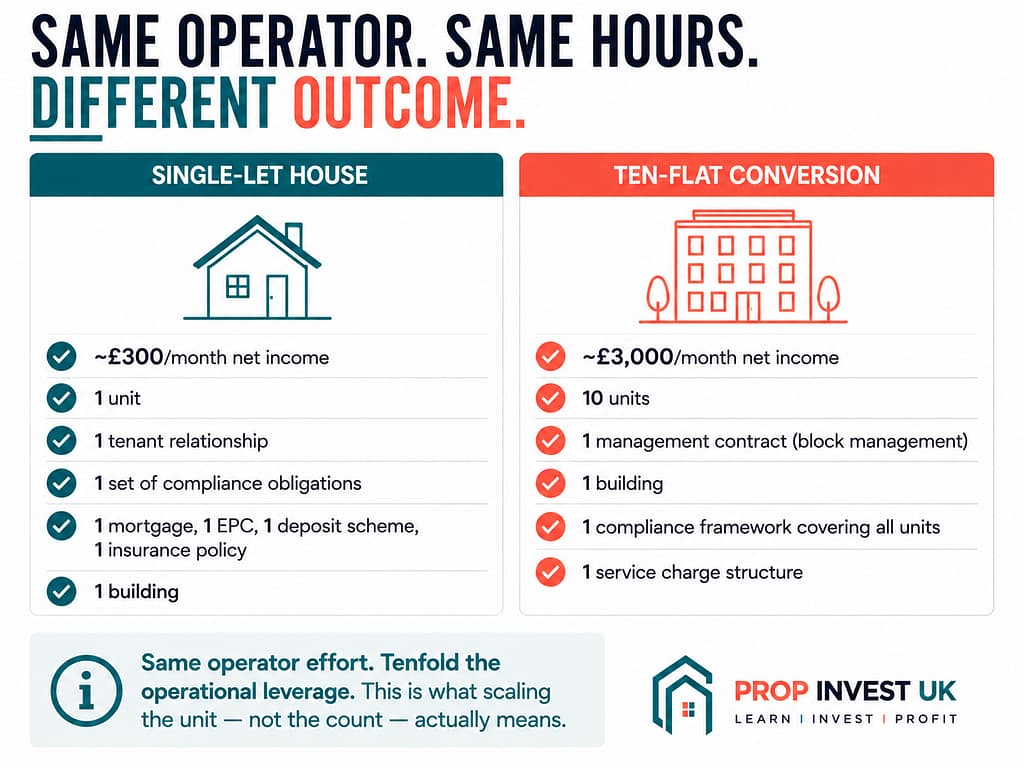
The easiest way to slow portfolio growth is to overpay on the way in. A weak purchase price limits refinance options, compresses cash flow and removes margin for error. Strong portfolios are built at acquisition, not rescued later.
That means being disciplined about local demand, street-level quality, transport links, tenant profile and future lettability. It also means understanding where value is genuinely being created. Cosmetic improvements can help, but they are not the same as buying below intrinsic value or repositioning an underperforming asset properly.
Investors who grow well tend to be selective. They are not trying to win every deal. They are trying to avoid mediocre stock that ties up capital and management bandwidth.
Yield is not the whole story
A property with headline appeal can still be a poor portfolio asset. Cheaper stock in weaker locations may offer attractive income on day one, but can prove harder to finance, harder to tenant and harder to exit. On the other hand, better-quality assets in stronger rental areas may support more stable long-term performance even if the initial numbers look less dramatic.
This is where experience matters. Good portfolio building is rarely about the loudest spreadsheet. It is about durability.
Finance is the engine of growth
If you want to know how to grow buy to let portfolio assets beyond a small handful of properties, finance strategy becomes central. The investors who keep expanding are rarely using the same approach they used on their first purchase.
You need to think in terms of borrowing capacity, refinancing timing, lender appetite, personal versus company structures, tax efficiency and cash buffer management. None of that is glamorous, but it determines whether your portfolio can keep moving.
Too many investors become asset rich and liquidity poor. They hold equity, but cannot deploy capital without stress. That creates hesitation, and hesitation kills momentum.
A better approach is to review finance as an active strategy, not an administrative task. Which assets should be refinanced and when? Which debt structures are restricting flexibility? Where is your exposure to rate changes? How much dry powder do you need to act quickly when the right opportunity appears?
This is one of the major advantages of a more structured property approach. Experienced operators understand that growth is often limited less by finding property and more by arranging capital intelligently around it.
Build systems before you think you need them
A single rental can run on memory and goodwill. A portfolio cannot. Once you add multiple properties, different tenancies, compliance deadlines, maintenance cycles and lender obligations, poor systems become expensive very quickly.
That does not mean bureaucracy for the sake of it. It means basic operational control. You need clean reporting, reliable management, visibility on property performance, and a process for dealing with problems before they become costly.
If you are building a hands-off portfolio, this matters even more. Hands-off should not mean blind. It should mean professionally managed, with clear oversight and accountability.
For many investors, this is the turning point. They realise they do not want to create a second job. They want exposure to residential property, long-term rental income and capital backed by real assets, without being the person chasing contractors and fielding tenant issues. That is a sensible commercial position, not a weakness.
Growth comes from recycling capital well
There are only so many times you can save your way to another deposit. Portfolio growth usually accelerates when investors learn to recycle capital efficiently.
That may involve buying assets with scope for improvement, refinancing at the right moment, disposing of underperforming stock, or moving capital into better-structured opportunities. The key is not motion for its own sake. It is getting each pound to work harder without taking reckless risk.
Some properties deserve to be held for years because they are stable, well-located and operationally easy. Others should be treated more critically. If an asset is consuming time, underdelivering financially or blocking better opportunities, sentiment should not keep it in the portfolio.
Strong investors review holdings like a business. They ask whether each asset still earns its place.
Beware the hidden ceiling of self-management
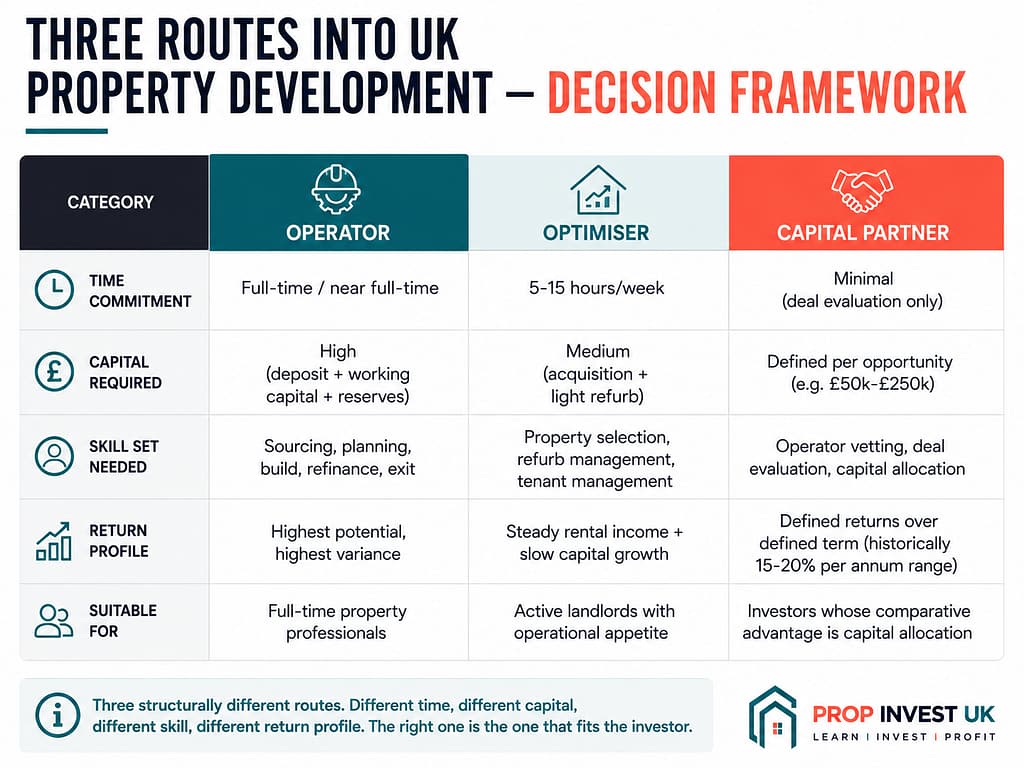
Many landlords hit a ceiling because their portfolio depends too heavily on them personally. They source the deal, arrange the works, manage the letting, solve the issues and keep the records. That can work at small scale. It does not scale well.
The more capital you deploy, the more costly your time becomes. At that point, growth often depends on stepping into a more professional model, either through stronger in-house systems or by working with experienced operators who can source, execute and manage to a commercial standard.
That is especially relevant for investors who want property exposure but do not want landlord admin. There is a meaningful difference between owning assets directly and building wealth through professionally structured property-backed arrangements where execution and oversight are already in place. For many serious investors, that route is simply more efficient.
Patience is part of the strategy
There is a tendency in property to make growth sound aggressive. In reality, good portfolio building is often measured. You may have periods of rapid expansion followed by quieter periods focused on consolidation, refinancing or improving management standards.
That is not inactivity. It is discipline.
A portfolio that survives changing market conditions is usually built by investors who can say no, hold cash when needed, and wait for the right deal rather than forcing the wrong one. Commercial confidence is not about being constantly in motion. It is about acting decisively when the numbers, structure and timing line up.
For investors looking beyond one or two rentals, the real question is not how many properties you can buy. It is how much quality, control and resilience you can build into the portfolio as it grows. Get that right and scale becomes a result of the process, not the goal itself.
Property rewards operators who stay selective, structured and commercially honest. If your next acquisition does not strengthen the machine, it probably should not be your next acquisition.